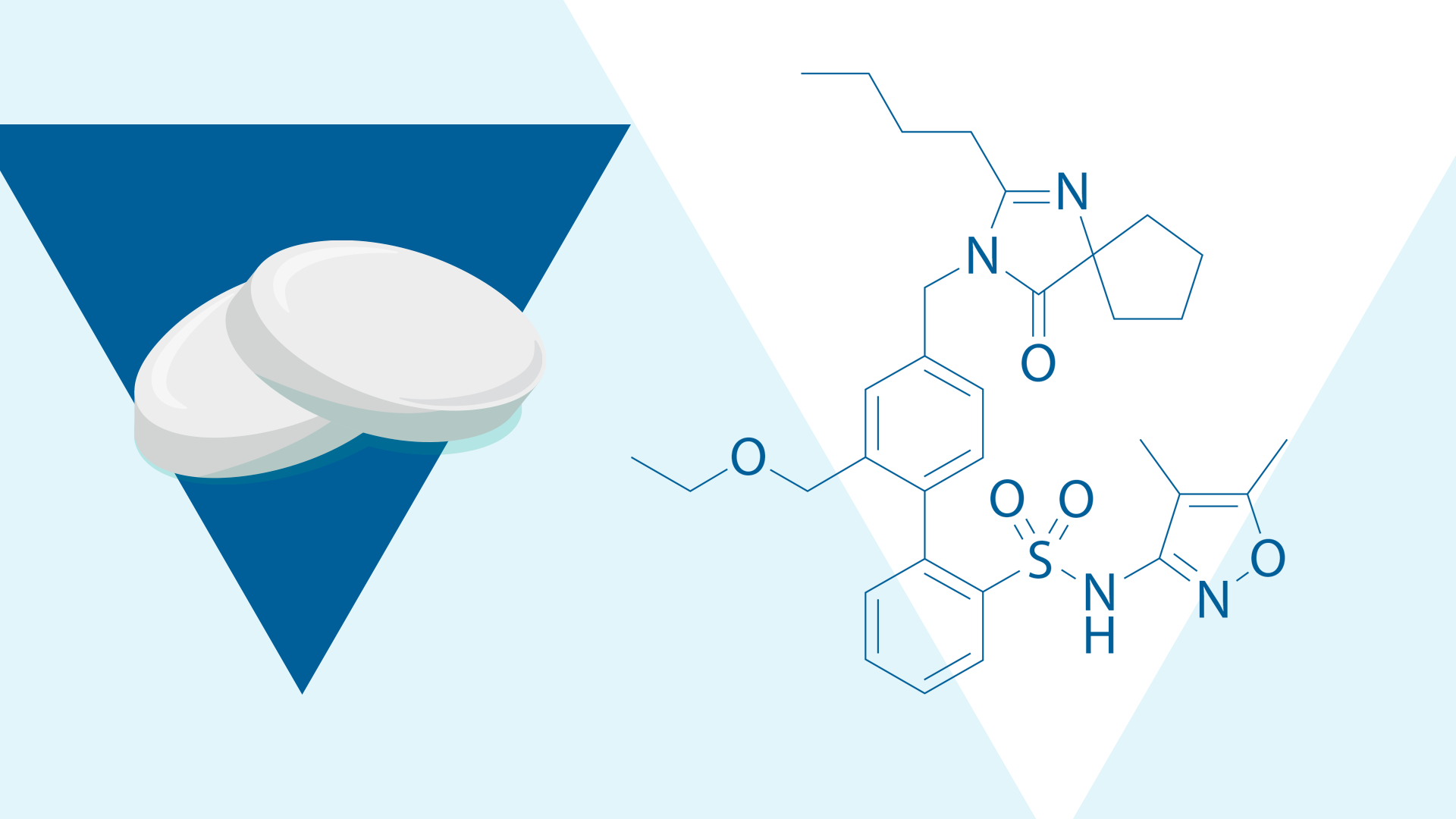
Sparsentan. Dual Angiotensin II AT1 Receptor Blocker and Endothelin ETA Receptor Antagonist, Treatment of Focal Segmental Glomerulosclerosis, Treatment of IgA Nephropathy
Drugs of the Future – 2020

This review discusses the evidence behind dual inhibition of the renin-angiotensin-aldosterone system (RAAS) and the endothelin (ET) pathway in the treatment of chronic kidney disease (CKD).1 The rationale for the combined inhibition and the potential benefits of dual inhibition of RAAS and ET are discussed, and preliminary clinical data are presented.1
RAAS and ET-1 in renal physiology and pathophysiology
RAAS
RAAS effectors, such as angiotensin II (Ang II) and aldosterone, play crucial roles in renal physiology and pathophysiology.1-3 Ang II, acting mostly via angiotensin II subtype 1 receptors (AT1R), causes vasoconstriction, increases intraglomerular pressure, promotes glomerulosclerosis and tubulointerstitial fibrosis, and contributes to podocyte dysfunction and proteinuria.1-3 Aldosterone also promotes fibrosis and proteinuria while regulating blood pressure.1,4
Endothelin-1 (ET-1)
Similarly, ET-1 affects renal function and hemodynamics, mainly via endothelin type A and B receptors (ETAR and ETBR).1,5 It acts as a vasoactive peptide that stimulates renal cell growth, extracellular matrix production, and inflammation, thus contributing to kidney disease development.1,5 ET-1 acts in multiple renal cell types, including the renal vascular tree, glomeruli, and the tubulointerstitial compartment.1,5
Interactions and cross-talk between RAAS and ET-1
There are both similarities as well as complex cross-talk between actions of RAAS effectors and ET-1 in renal pathophysiology.1 For example, Ang II stimulates ET-1 release and expression, whereas ET-1 mediates various vascular actions of Ang II.1,6,7 Overall, evidence that RAAS effectors and ET-1 exert similar actions in renal injury-related processes provides rationale for dual inhibition of RAAS and ET-1.1
Dual inhibition of RAAS and ET-1
Earlier clinical trials in the field have been add-on studies–where endothelin receptor antagonists (ERAs) were added to baseline treatments with renin-angiotensin-aldosterone system inhibitors (RAASis), such as angiotensin-converting enzyme inhibitors (ACEi) or angiotensin receptor blockers (ARBs).1,8-10 Beneficial effects on proteinuria from adding ERAs to RAASi have been confirmed in people with Type 2 diabetes with nephropathy.1,8-10
Single molecules that inhibit both RAAS and ET receptors have been developed and are undergoing clinical development, such as sparsentan.1 It has been evaluated for the treatment of primary focal segmental glomerulosclerosis (FSGS).1,11 The Phase 2 DUET trial was a randomized, double-blind, dose-escalation study evaluating the antiproteinuric efficacy and safety of sparsentan compared with irbesartan in patients with FSGS.1,11
Data suggests that dual inhibition of the RAAS and ET-1 pathway shows promise for reducing proteinuria and improving outcomes in patients with kidney disease.1
Related Content
Sparsentan. Dual Angiotensin II AT1 Receptor Blocker and Endothelin ETA Receptor Antagonist, Treatment of Focal Segmental Glomerulosclerosis, Treatment of IgA Nephropathy
Drugs of the Future – 2020

Efficacy and Safety of ACE Inhibitor and Angiotensin Receptor Blocker Therapies in Primary Focal Segmental Glomerulosclerosis Treatment: A Systematic Review and Meta-Analysis
Kidney Medicine – 2022

Efficacy and Safety of Immunosuppressive Therapy in Primary Focal Segmental Glomerulosclerosis: A Systematic Review and Meta-analysis
Kidney Medicine – 2022
Both authors were employed by Travere Therapeutics, Inc. Please see the publication for the full list of disclosures.
ACE, angiotensin-converting enzyme; Ang II, angiotensin II; ARB, angiotensin receptor blocker; AT1R, angiotensin II subtype 1 receptor; CKD, chronic kidney disease; ERA, endothelin receptor antagonist; ET, endothelin; ETaR, endothelin type A receptor; ETBR, endothelin type B receptor; ET-1, endothelin-1; FDA, US Food and Drug Administration; FSGS, focal segmental glomerulosclerosis; RAAS, renin-angiotensin-aldosterone system; RAASi, renin-angiotensin-aldosterone system inhibitor.
MA-SP-24-0107 | April 2026